

Creating a Toxin-Free Skincare Routine for South African Skin
Somewhere between the fifth serum ad on your Instagram and the sunscreen you keep forgetting to reapply, most people give up trying to build a skincare routine that doesn’t leave them out of pocket but still wondering if they are doing enough.
Everyone is selling something, half the ingredient names look like a chemistry exam, and while the word natural is used to market so many products, there’s very little “natural” inside the bottle.
South African skin has to deal with some really tough conditions, so the routine built for it has to be built properly, not assembled from whatever looked good on social media that week.
You need a simple routine that holds up against this country’s sun, its dry inland air or its humid coastlines, depending on where you live, and without having to Google each ingredient and in this guide, we’re going to share all the information you need to know in order to build a routine that works best for you.
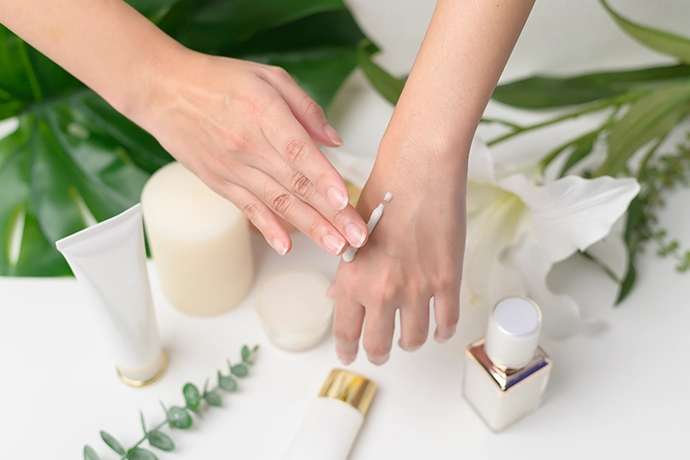
Why South African skin needs a different approach
While scrolling Instagram and Youtube shorts, you’re going to be bombarded by beautiful people punting their routine as the only one that works. Usually, these influencer wannabees are US or UK based and have never even experienced heat like we have it this side.
South Africa experiences summertime UV Index values of 10 or higher across the entire region, a level classified as extreme and capable of causing sunburn in under 15 minutes on unprotected skin.
This UV exposure remains a problem even in winter, since midday UV levels frequently reach moderate to high even during the colder months, meaning a routine built only for summer leaves skin exposed for half the year.
Add the country’s climate range, from the dry Highveld to humid coastal regions, and skin here faces rea; oxidative stress and moisture loss from multiple directions at once, not just from the sun overhead.
Your routine needs to be created around your skin type as well as the conditions you deal with on a daily basis.
By following this simple guide, you can start putting one together that will leave your skin feeling supple, protected and plumped.
Step one: Get a cleanser that nourishes the skin barrier
A good cleanser strips away the day's build up without leaving skin feeling tight (that tightness is usually a sign that the product has removed the natural oils that the skin barrier needs to function properly). Cream or oil-based cleansers are excellent for dry inland climates, while a gentler foaming formula works better in humid coastal areas where excess oil and congestion are more common. Cleansing twice daily, morning and evening, is enough for most skin types. You don’t want to over cleanse, as this can cause irritation and eventually do a lot more harm than good.
Step two: Use hydration that matches your climate
Hydrating serums containing humectants such as hyaluronic acid or glycerine draw moisture into the skin, and applying them to slightly damp skin can significantly improve how much moisture gets absorbed. Inland and Highveld climates typically need a richer follow up moisturiser to lock that hydration in, while coastal humidity often just needs a lighter lotion so that your skin doesn't feel congested by midday.
Step three: sun protection, non-negotiable
Broad spectrum sunscreen applied every morning is the single most protective step in any South African skincare routine, given the country's consistently high UV exposure across all seasons and skin tones. Reapplication every two hours when you are spending time outdoors is as important as the first application, since sunscreen effectiveness declines with sweat, water contact and time. If you can get into the habit of using sunscreen, it will do much more long-term work against photoaging, pigmentation and skin cancer risk than any serum, treatment or expensive cream on the market.
A Quick Guide to Reading a Label (Without Needing a Science Degree)
What to look for | Why it matters | Simple check |
Ingredient list length | Shorter formulas mean fewer potential irritants | Under 15 ingredients is a good starting benchmark |
Fragrance listing | Synthetic fragrance is a common sensitivity trigger | Look for fragrance free or naturally scented |
Preservative type | Some preservatives are more skin friendly than others | Research unfamiliar preservative names before buying |
Packaging claims | Marketing terms are not regulated the same as ingredients | Check the actual ingredient list, not just the front label |
Building The Routine Your Skin Will Love
A routine only works if it survives real mornings, so simplicity beats complexity for most people starting out. Four steps, cleanse, hydrate, protect and moisturise, cover the essentials without requiring a 10 product shelf that never gets fully used.
At Oh My Health, we have put together a natural, organic and toxin free skincare alongside our supplements and household products, all built around the idea that a routine should support the body so that you can continue to live a healthy lifestyle.
Good skincare does not need to be complicated to work.
It just needs to be consistent, suited to your climate, and built from products that do what they say they’ll do.
Frequently Asked Questions
What makes South African skincare different from routines elsewhere?
South African skincare needs to address consistently high UV exposure across all seasons, alongside climate extremes ranging from dry Highveld air to humid coastal conditions within the same country.
Is toxin free skincare actually safer than conventional products?
Toxin free skincare typically means formulas avoid synthetic fragrances, harsh preservatives and certain sulphates, which can reduce irritation for sensitive skin, though ingredient quality varies by brand regardless of labelling.
How often should sunscreen be reapplied in South Africa?
Sunscreen should be reapplied every two hours during outdoor exposure, since South Africa’s UV Index frequently reaches extreme levels of 10 or higher in summer and remains moderate to high even in winter.
Do oily and dry skin types need different toxin free routines?
Oily and dry skin types both benefit from toxin free ingredients, though oily skin suits lighter, foaming cleansers and lotions while dry skin benefits from richer, cream based formulas for the same climate.
Can a natural skincare routine still protect against South African sun exposure?
A natural or toxin free routine protects effectively against sun exposure when it includes a genuine broad spectrum sunscreen, since natural formulation and sun protection are separate considerations that both need addressing.
